It’s been a while (4 years!) since my last post so that means a few things had to have happened for this to manifest. First, I’m on winter break hanging out with my family and have some more free time. Second, I started working on a personal portfolio and noticed I hadn’t posted anything since 2021. Third, and most important, I’m inspired by a new app I’ve been using – Yuka!
I kept seeing people on TikTok sharing images from an app that rated foods and I was intrigued. I mentioned it to my wife and she told me it was Yuka. I downloaded immediately and have been hooked ever since. It even occupies a coveted spot on the first screen of my iPhone!
How It Works
Yuka rates food products based on three factors:
1. Nutritional value (60% of the score)
2. Additives (30% of the score)
3. Organic nature (10% of the score)
You scan a barcode and get a score from 0-100, color-coded from red (poor) to green (excellent). Pretty simple.
The app is free to use, but you can upgrade to premium for features like searching items (instead of scanning), offline mode, and adding dietary preferences. Feature request – option to categorize food so you can search your history more efficiently! You choose what you pay for the premium version, which is kinda wild. The default is set to $15/year – I chose to pay $20.
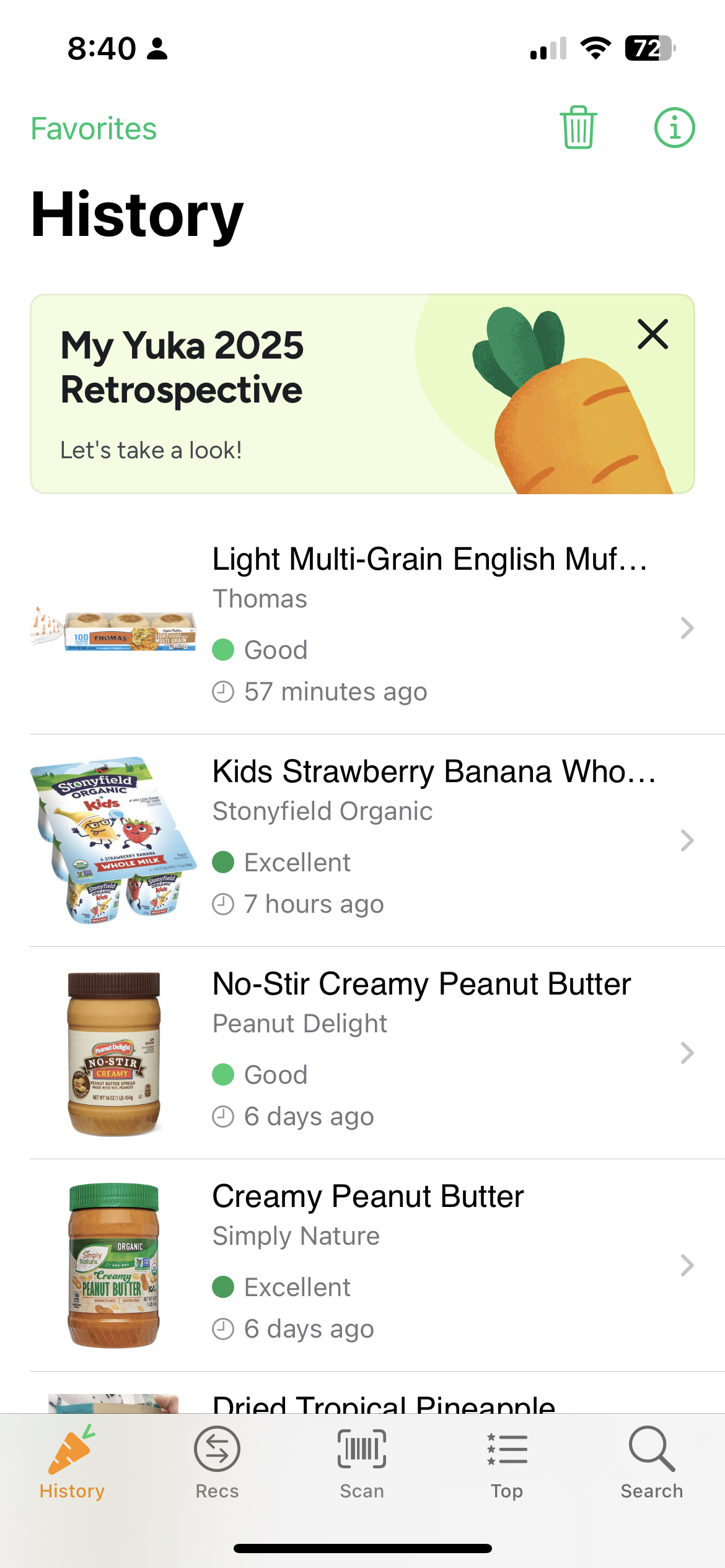
Why I Think It Works
The app is great because it solves a problem – collecting and analyzing health information about your groceries. But how it solves this is what makes it really stand out for me.
Immediate value. I love the instant gratification of it tbh. You scan, you get a score, you get a dopamine hit. There’s no waiting, no logging meals, no entering data. Just scan and know. In a grocery store aisle, that immediacy is everything. You’re already making dozens of micro-decisions about what to buy – Yuka just makes one of them feel easier and more rewarding.
Motivation to do better. I feel like I’m pretty good about reading ingredient labels and trying to avoid products with too many weird things, but you inevitably miss stuff. And my vision isn’t what it once was so squinting at ingredients in 8-point font isn’t really an option for me. And that’s where Yuka comes in.
Story time: a brand of peanut butter I’d been buying received a 3 score on the app😱 There weren’t even many ingredients, but there was an additive that the app really wasn’t a fan of. I was shocked. I haven’t bought that brand since, and honestly I’m still embarrassed from that choice 😆
And that’s the thing – shame is a powerful motivator. Not in a punitive way, but in a ‘I thought I was making good choices, but now I know I can do better’ way.
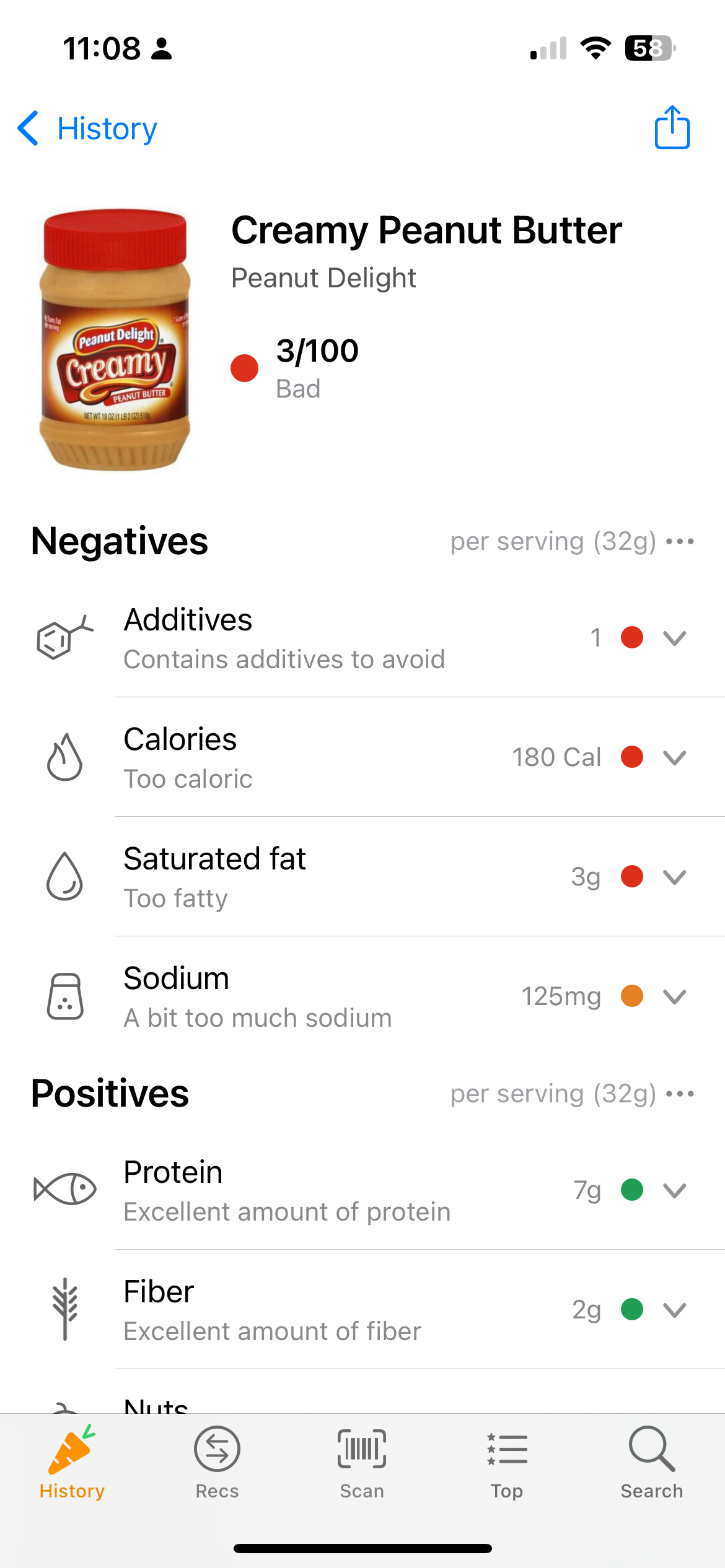

Inherent gamification. There are no explicit gamification features like streaks or badges, but I feel like gamification is inherent to the product. The color-coding creates a natural goal: get more greens, avoid the reds. The recommendations feature suggests better alternatives when you scan something with a low score, which creates a clear path to ‘winning.’ I want to get better products for my family and Yuka helps with that in a way that feels like progress, not homework.
Behavior Change
The ultimate goal of any health app is behavior change, and Yuka actually achieves it for me. I always read labels, but now I’m more likely to put down an item and look for something else.
The key is that Yuka doesn’t ask you to change everything about how you shop – it just asks you to scan a barcode instead of read a label. I’m honestly pulling out my phone anyway to see how my kids are behaving at home so no real change for me. Look, I’ll still buy the thing with the red score (l’eggo my eggo, amirite?!), but my “portfolio” of purchases is definitely more green thanks to Yuka.